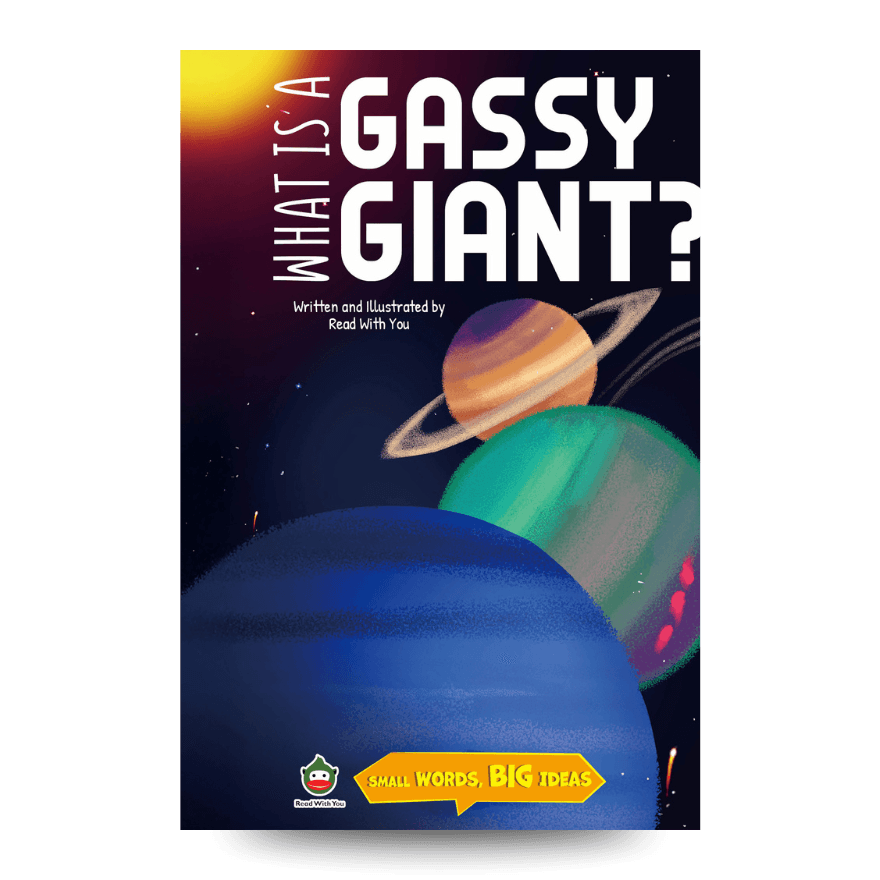
What Is a Gassy Giant?
Ella and Milo love watching the night sky, but one evening something surprising happens. A picture of Jupiter in Ella’s book begins to swirl, and the kids discover that the giant planet is not made of land at all. It is full of spinning gases like hydrogen and helium. As they turn each page, they learn that some planets even have diamond rain deep inside them. Finally, they find out why Uranus and Neptune are called ice giants and how different elements freeze far from the Sun. Every page helps Ella and Milo understand the amazing science behind the biggest planets in our solar system.
Skills: Early space science, Understanding gas vs. solid, Building curiosity, Learning new vocabulary
Why it’s great for 5-year-olds: Big ideas are shown in small, easy steps with clear examples and simple language. The story turns complex science into fun pictures that young readers can understand and enjoy.
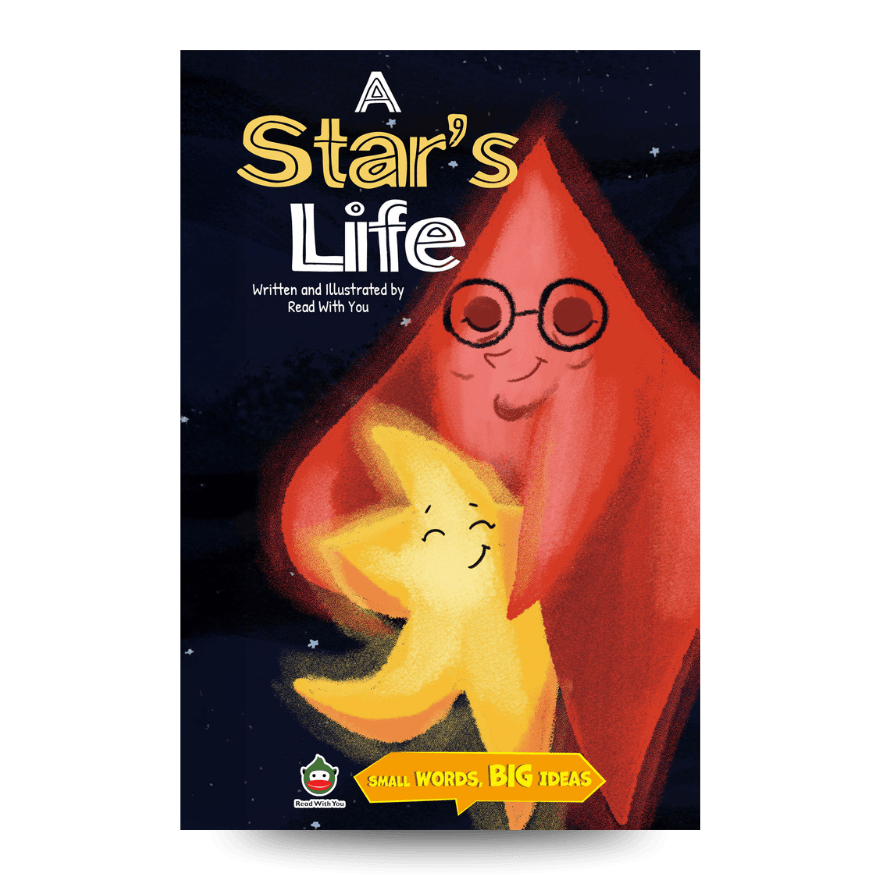
A Star’s Life
Little Star feels worried when he sees that his glow is not as bright as the other stars. Grandma Star floats beside him and gently explains that every star changes as it grows. Some stars shine blue when they are young, others turn red when they get older. Together, they watch a giant star grow into a red giant, and later shrink into a tiny white dwarf. Little Star also learns that some stars explode into supernovas or become mysterious black holes. Through each moment, he understands that growing and changing is a natural part of every star’s life.
Skills: Understanding growth and change, Early astronomy, Emotional awareness, Comparing sizes and stages
Why it’s great for 5-year-olds: The book uses simple feelings and gentle images to explain big science ideas. Children can easily follow the story while learning how stars live, grow, and transform in the sky.
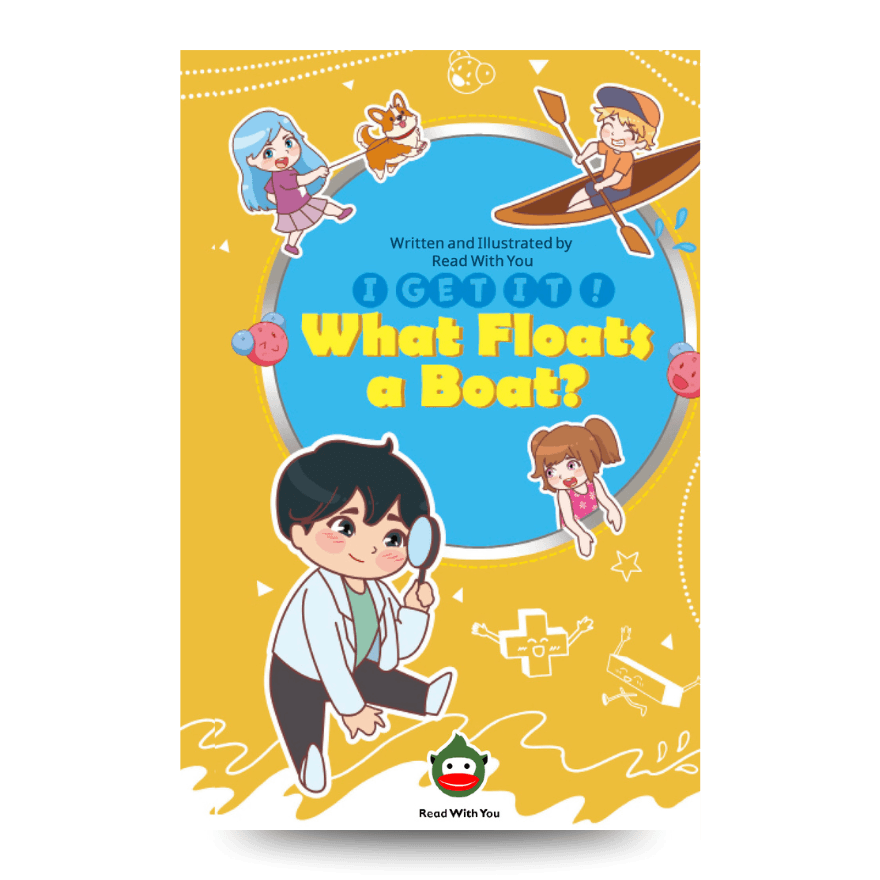
What Floats a Boat?
Lily loves making tiny leaf boats, and on a sunny day her newest one floats perfectly on the pond. Max tries the same with a shiny pebble, but his pebble sinks right away. The two friends wonder why some things float while others sink. At home, they try a simple experiment with pepper and a soapy finger. The pepper scatters across the water, and the kids see how water molecules pull together. Step by step, Lily and Max learn that shape, weight, and the way water “holds” an object all help decide whether something floats or sinks.
Skills: Early physics, Hands-on exploration, Observing cause and effect, Simple scientific thinking
Why it’s great for 5-year-olds: The story uses easy experiments and clear examples that young children can watch, try, and understand. It turns everyday moments into fun lessons about how the world works.
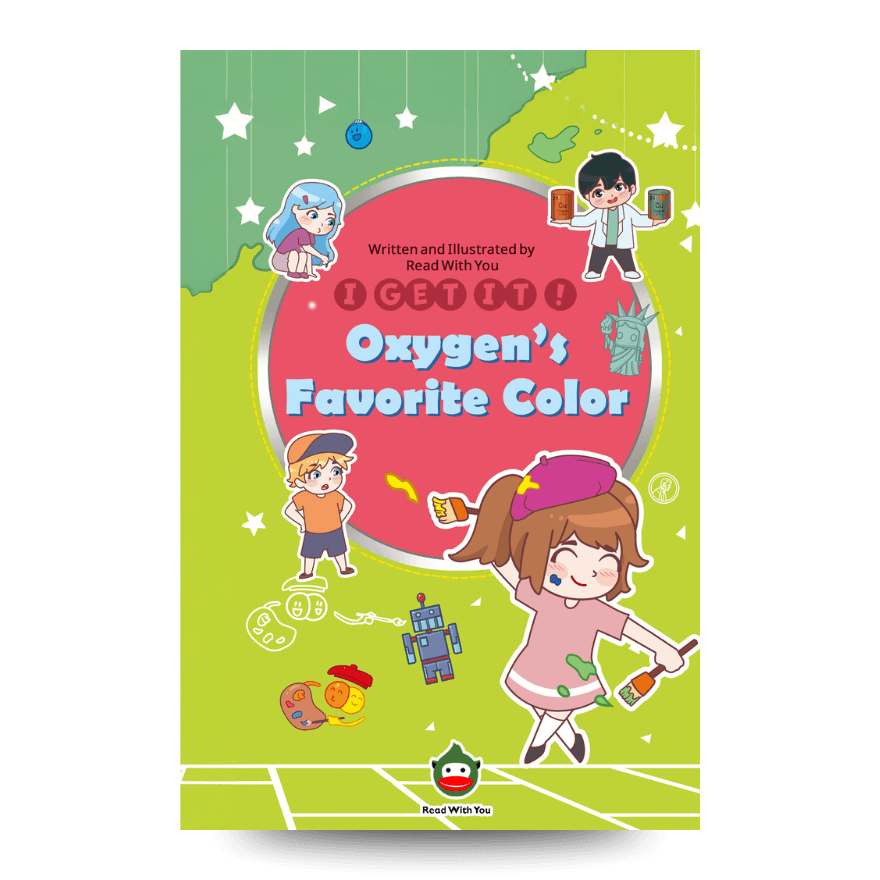
Oxygen’s Favorite Color
Lily is drawing with her crayons when she notices something odd: the Statue of Liberty in her picture looks green, even though it is made of metal. Max joins her, just as confused. Together, they begin to explore why metal changes colour over time. With a simple experiment using vinegar and old pennies, they watch the copper slowly turn a new shade. Later, Lily slices an apple and sees it turn brown. She and Max instantly recognise the same little “artist” at work, oxygen. Each moment helps them see how air can change the things around us in surprising ways.
Skills: Early chemistry, Observation skills, Understanding reactions, Connecting real-life examples
Why it’s great for 5-year-olds: The book explains a big science idea with small, familiar objects. Kids can see the color changes themselves, making the concept of oxidation easy to understand and fun to explore.
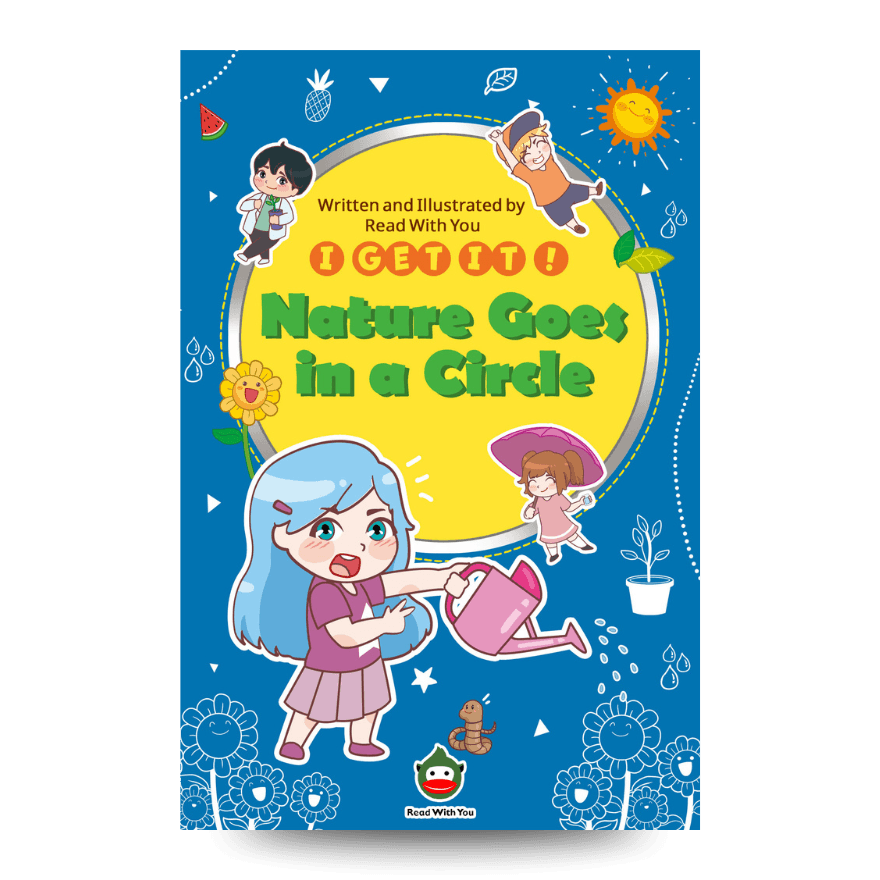
Nature Goes in a Circle
What if you could drink sunlight? This bright and friendly book takes young readers on a simple journey through nature’s endless cycle. Children watch how sunlight helps plants grow, how fruit forms, and how energy moves from the sun to the plant to the child, and then back again. As kids water plants, taste fruit, and ask big questions about life, they begin to see how everything in nature is connected. The world becomes a circle full of movement, growth, and wonder.
Skills: Understanding cycles in nature, Early science thinking, Cause and effect, Observing the environment
Why it’s great for 5-year-olds: The book uses clear images and simple steps to explain how energy moves through the world. Young readers can easily follow the circle of nature and connect it to everyday experiences.

What Is the First Rule of Energy?
A bouncing ball rolls through the park, and suddenly the whole playground becomes a science lesson. One push leads to a swing moving, marbles rolling, wheels turning, and children jumping, running, and laughing. With each action, readers discover the same idea at work: energy never disappears, it only changes form. The story shows how motion, sound, heat, and light all come from energy moving from one place to another. Simple scenes help young readers understand a rule that powers everything around them.
Skills: Early physics, Understanding energy, Observing motion, Connecting actions to outcomes
Why it’s great for 5-year-olds: Everyday playground moments make a big science idea easy to see. Children learn through familiar actions, helping them understand energy without needing complex explanations.

What’s the Matter?
Curious Cat wants to understand everything around her. But what exactly is matter? With help from a friendly scientist, she learns that matter is everything she can touch, see, or smell. She discovers that solids stay in one shape, liquids can pour and splash, and gases float and spread like steam from a warm cup of tea. Through everyday examples, Cat begins to notice matter everywhere she goes. Each new discovery helps her see the world with fresh eyes and a curious mind.
Skills: Early science vocabulary, Understanding solids–liquids–gases, Observation, Asking questions
Why it’s great for 5-year-olds: Simple examples from daily life make a big idea easy to understand. Children learn to look closely at objects and notice what they are made of, supporting early scientific thinking.
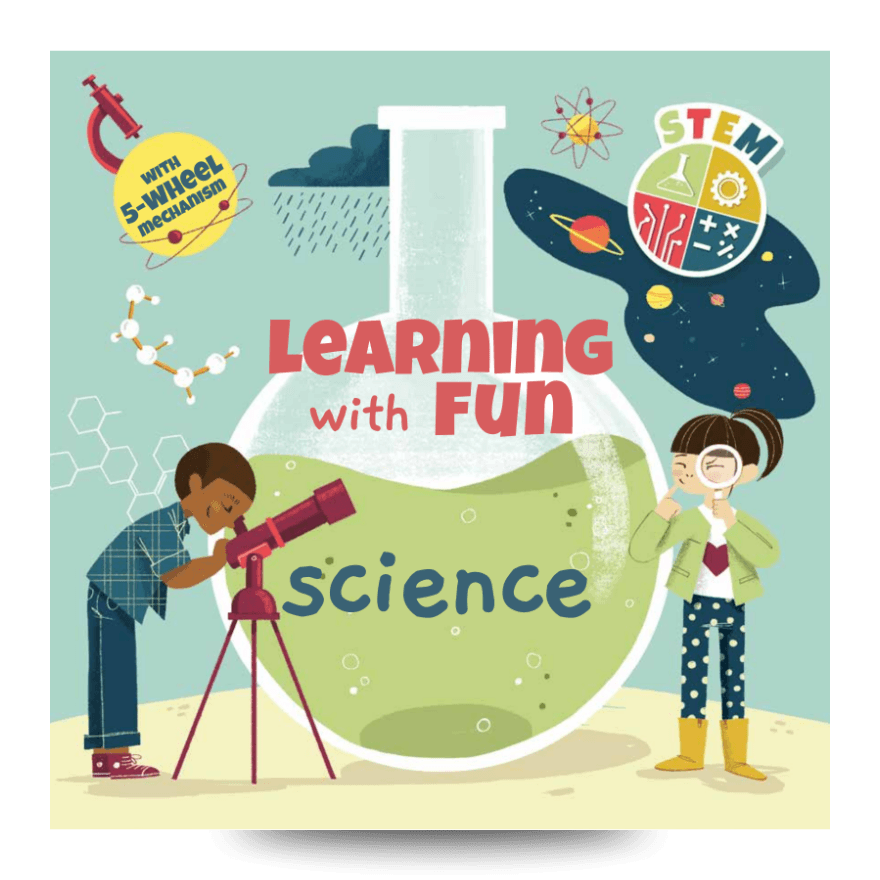
Learning with Fun – Science
Max and Micky explore the world with curious eyes and simple experiments. They learn how the human body works, what animals eat, and how plants grow from tiny seeds. They discover why seasons change and how water travels in a never-ending cycle. Every chapter invites children to look, touch, compare, and ask questions. With playful activities like growing a plant, watching insects, or guessing seasonal fruits, young readers learn that science is everywhere, alive, moving, and full of exciting surprises.
Skills: Observation, Understanding life cycles, Early biology, Scientific thinking, Hands-on exploration
Why it’s great for 5-year-olds: Short explanations and simple activities help children learn by doing. The book turns everyday moments into science lessons that are easy to follow and fun to try at home or in the classroom.
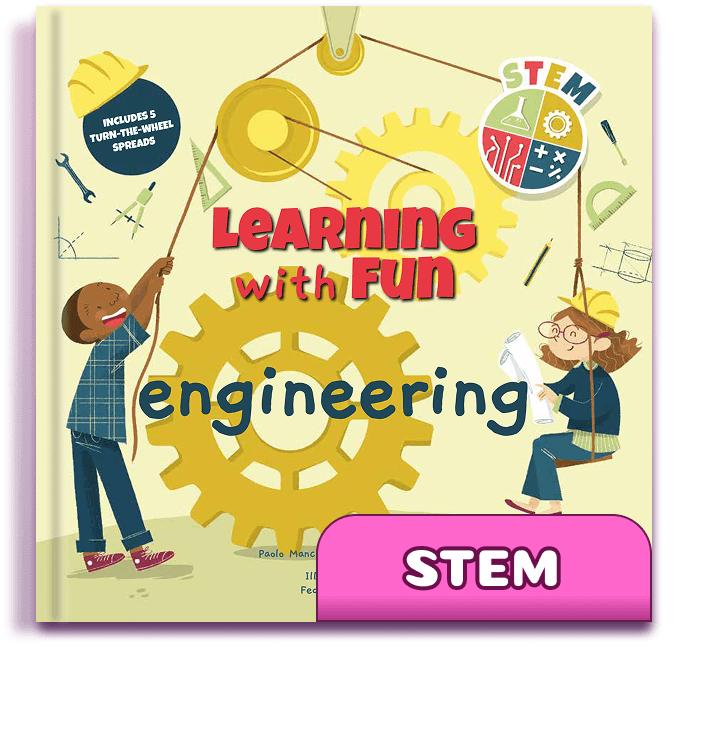
Learning with Fun – Engineering
Julia and Max travel through time to explore clever ideas and amazing inventions. They build a catapult, make a cup telephone, and even create a magic pen that lifts paper with static electricity. With each activity, they learn how simple tools became windows, beds, wheels, bridges, and even the first flying machines. Old inventions spark new ideas, and step by step, the kids begin to think like real engineers. Their final challenge is the biggest one of all: design their own invention and imagine a time machine of the future.
Skills: Problem-solving, Early engineering thinking, Understanding simple machines, Creativity, Hands-on building
Why it’s great for 5-year-olds: The book uses playful inventions and easy activities to explain engineering in a friendly way. Young readers learn how ideas grow, change, and turn into new solutions they can imagine and create.
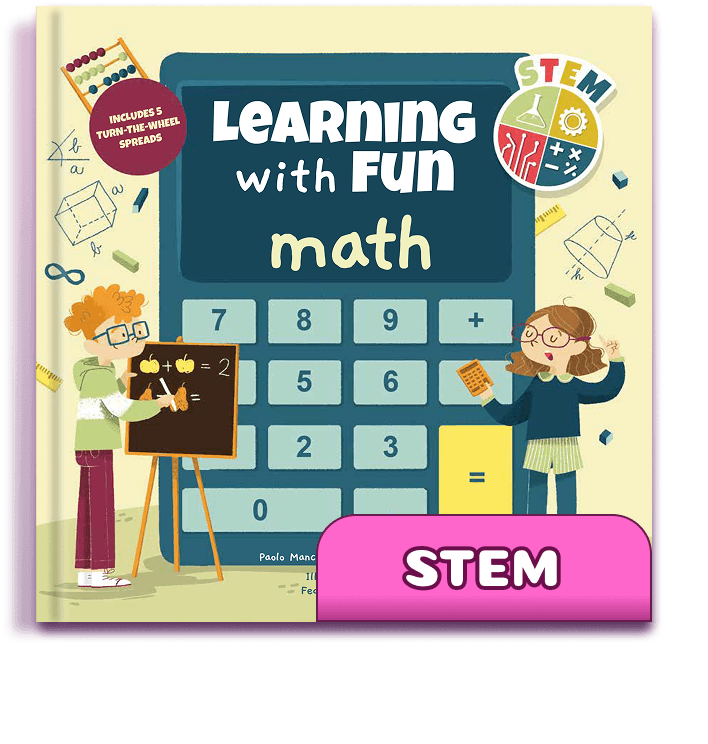
Learning with Fun – Math
Mark and Julia, the cheerful Mathematipals, make math feel simple, friendly, and fun. They teach counting, adding, subtracting, and even multiplying through playful stories and clear examples. Kids meet characters like Count-erella and Little Adding Hood, who turn math problems into silly adventures. Through games with flamingos, muffins, horses, and bowling pins, children learn how numbers work in everyday life. Step by step, they discover that math is not something to fear, it is a tool they can use anywhere.
Skills: Early numeracy, Counting and comparing, Simple operations, Logical thinking, Problem-solving
Why it’s great for 5-year-olds: The book teaches math with humor, stories, and easy activities. Young readers build number confidence through short, clear examples that make math feel playful and approachable.