10 Simple and Fun STEM Activities for Preschoolers

Preschoolers learn best when they play, explore, and use their hands. That’s why STEM (Science, Technology, Engineering, Art, and Math) activities are perfect for preschoolers. These activities help children grow critical thinking, problem-solving, and creativity while having fun. When learning feels like play, kids are naturally interested in the world around them and develop a love for discovery.
“Kids are like little scientists. They love to explore, create, and discover new things. When we encourage their curiosity, they grow into confident learners.” – National Geographic Kids
This blog is your guide to easy and fun STEM activities that preschool teachers can integrate into the classroom. We’ll explain how STEM supports development, offer tips for incorporating it into daily lessons, and share exciting activities for each STEAM category. By the end, you’ll feel ready to bring these ideas to life and inspire your students!
1. How STEAM Activities Help Preschoolers Learn
STEM is more than a teaching method; it’s a way to develop curiosity in young minds. Studies from Fairfax County Library show that hands-on STEM activities build foundational skills like observation, critical thinking, and creativity. Preschoolers learn best through play, and STEM turns learning into a fun adventure where they can explore and test their ideas.
These activities also support long-term development. A report from the U.S. Bureau of Labor Statistics predicts a 10.8% growth in STEM-related careers over the next 10 years. Not all children will pursue STEM fields. But, early exposure to STEM builds valuable skills like teamwork which are useful in any path they choose. By helping preschoolers explore science, technology, engineering, art, and math, we’re setting them up for success in school and beyond.
You can make this journey fun and educational by starting a free trial of Magic Pags and using the parental control dashboard.

2. How to Incorporate STEM in a Preschool Classroom
Bringing STEM into your classroom doesn’t have to be complicated. The best activities often use simple materials like blocks, paper, or even natural items collected during a walk. STEM turns everyday moments into learning opportunities. For example, teach science by exploring shadows at playtime. Introduce engineering by building towers with blocks.
Story time can also be a great place to add STEM. After reading a book like The Very Hungry Caterpillar, preschoolers can create a butterfly life cycle using art supplies.
Eric Carle’s The Very Hungry Caterpillar, published by Penguin Random House, introduces toddlers to counting, the days of the week, and the life cycle of a butterfly. This story supports math development while counting and develops scientific thinking through the butterfly’s life story. Its interactive structure makes it an important example for early learning. Don’t forget to check out our best stories list for kindergarteners.
Combining literacy with STEM helps preschoolers connect subjects and see learning as an exciting journey. Encourage students to ask “why” and “what if” questions; they are the gateway to discovery and deeper thinking.
3. Fun STEM Activities for Preschoolers
STEM activities are all about exploration and play. Each category offers unique ways for preschoolers to develop essential skills. Below, you’ll find simple activities for each STEM area, along with explanations of why they’re beneficial for young learners.
1. Science
Science activities are a fantastic way to help children understand the world around them while encouraging observation skills.
Color Mixing Magic:
You’ll need clear cups, water, and food coloring. Fill the cups with water and let the children add drops of the primary colors red, blue, and yellow. Guide them to mix the colors and discover new ones. You can ask questions like, “What do you think will happen when we mix blue and yellow?” This activity introduces them to the concept of color mixing and helps develop their ability to predict outcomes. These skills are essential for enhancing critical thinking and prediction-making, which will support future learning in science and art.
Plant a Bean in a Bag:
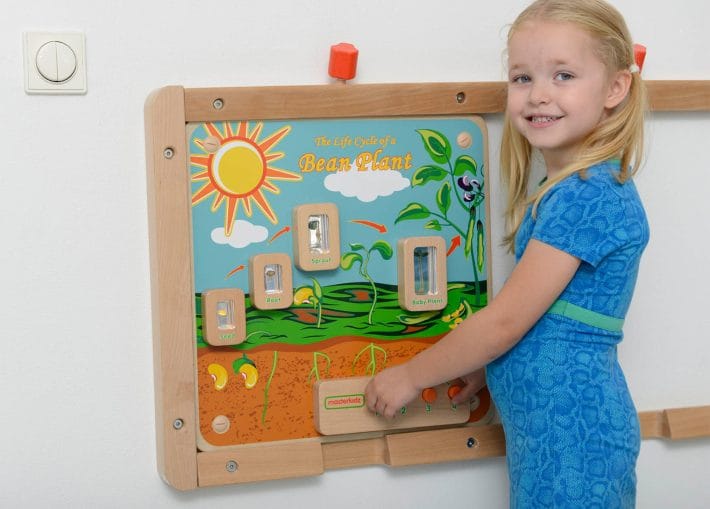
You’ll need to prepare ziplock bags, paper towels, and beans. Show the children how to dampen the paper towel, place it in the bag with a bean, and seal it. Then, tape the bag to a sunny window. Encourage them to observe the changes daily, such as the bean sprouting roots or stems, and talk about the process of plant growth. This activity builds patience and understanding of the plant life cycle. These skills are essential for developing scientific observation skills, helping children understand growth, and change.
2. Technology
Technology activities teach kids about tools and how they shape the world. They can be screen-free and focus on creativity and exploration.
Shadow Play:
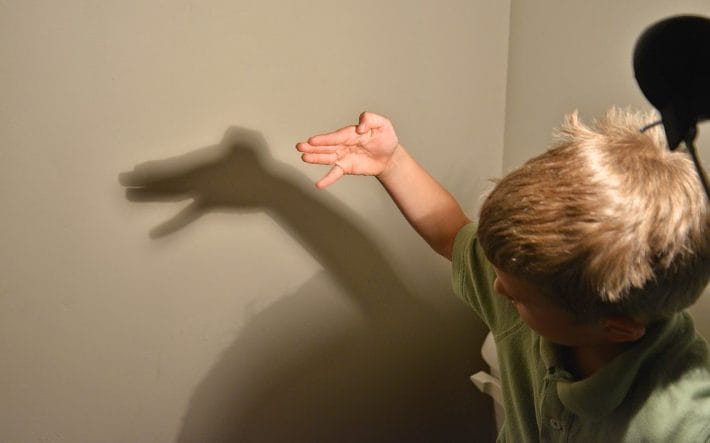
You’ll need to gather a flashlight and paper cutouts. Dim the lights in the room, and show the children how to use the flashlight to cast shadows on the wall with their cutouts. Encourage them to experiment with moving the flashlight closer or farther away to see how the shadows change. Ask them questions like, “What kind of stories can you tell with the shadows?“ This activity is a fun way to teach them about light and shadows while developing creativity. These skills are essential for grasping the basics of light and perspective, helping children make connections between movement, distance, and size.
Building a Basic Circuit:
You’ll need a battery, aluminum foil, and a small light bulb. Show how to connect the materials to create a simple circuit and light up the bulb. Then, let the children try it for themselves. Be sure to explain how electricity flows through the circuit, and teach them carefully during the activity. These skills are essential for developing an early understanding of electrical concepts, encouraging logical thinking and curiosity about how things work.
3. Engineering
Engineering activities let kids build and solve problems, helping them develop resilience and creativity.
Building a Tower:
You need to provide materials such as plastic cups, blocks, or marshmallows and toothpicks. Challenge the children to build the tallest tower they can. As they work, talk to them about concepts like stability and balance. If a tower falls, ask them, “What can we do to make it stronger?” This activity develops teamwork and problem-solving while introducing basic engineering principles. These skills are essential for building spatial awareness and structural reasoning. It will support later learning in STEM subjects.
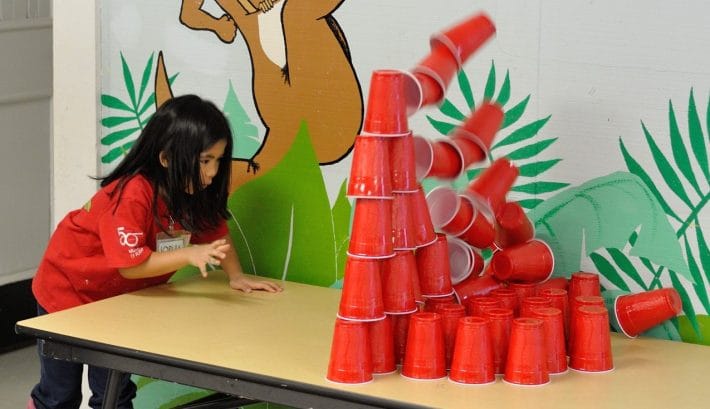
Boat Challenge:
You need to give the a sheet of foil and a bottle of water. Show them how to shape the foil into a boat and place it in the water to test if it floats. Encourage them to experiment by adding weights, such as small coins, and redesigning their boats to make them hold more weight. This activity teaches buoyancy in a fun, hands-on way. These skills are essential for understanding physical science principles like floating and sinking. It is helping children develop problem-solving strategies.
4. Art
Art activities for preschoolers let them express their creativity while exploring concepts like shapes, colors, and patterns.
Nature Collage:
You can start with a nature walk where the children can collect items like leaves and flowers. Once back in the classroom, give them glue and paper, and show them how to arrange and stick their findings onto the paper to create unique artwork. Talk to them about the different textures and shapes they’ve collected to connect the activity to the natural world. These skills are essential for developing observational skills and an appreciation for nature,
It is helping children categorize and understand their environment.
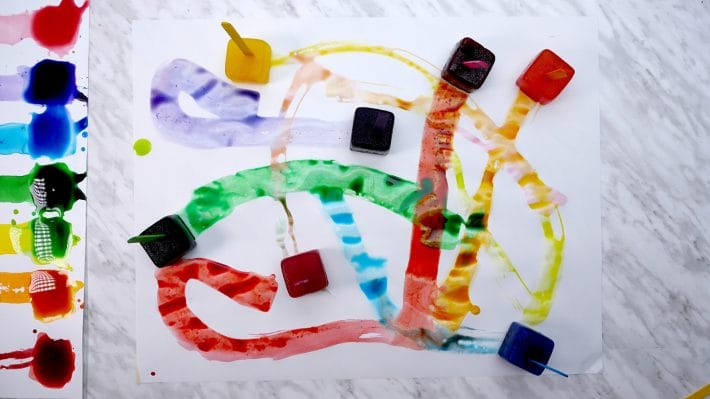
Ice Painting:
You need to prepare colored ice cubes by freezing water mixed with food coloring. Let the children use the melting ice cubes to paint on paper. As they work, encourage them to observe how the colors mix and the way the ice changes shape as it melts. This activity combines sensory play with creative expression and helps develop fine motor skills. These skills are essential for understanding cause-and-effect relationships. It is allowing children to explore changes in matter and artistic creativity with confidence.
5. Math
Math activities for preschoolers turn numbers and patterns into exciting challenges.
Button Sorting:
You need to provide a variety of buttons in different colors, shapes, and sizes. Show the children how to sort them into groups based on color, size, or shape, and then count how many buttons are in each group. Ask questions like, “Which group has the most? Which has the least?” to help them develop number sense and early categorization skills. These skills are essential for recognizing patterns and making comparisons, and also it will help children grasp mathematical concepts more easily.
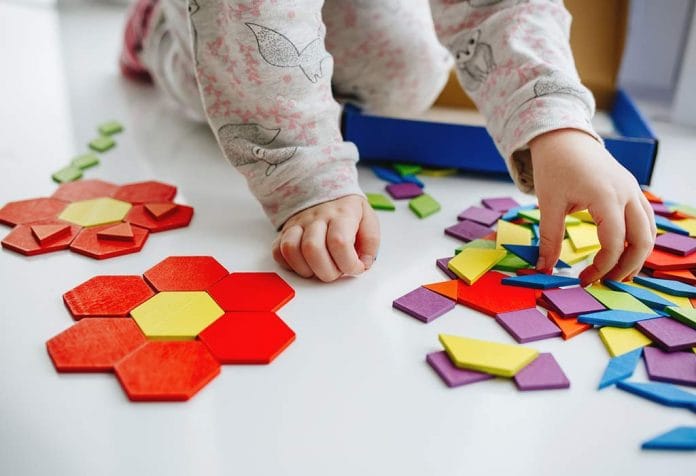
Block Pattern Game:
You’ll need different shape cutouts from colorful paper (or thicker paper like card stock). You can use straight-edged shapes like triangles, squares, rectangles, pentagons, hexagons, and parallelograms. These will be easier to create patterns with.
Begin by creating a simple pattern with colored shapes, such as red-blue-red, and ask the children to continue it. As they get the hang of it, increase the complexity of the patterns. You can also encourage them to explain their thought process as they build. This activity helps strengthen their logical thinking and pattern recognition skills. These skills are essential for the ability to identify logical relationships, children will have an easier time in.
Final Thoughts
STEM activities are like a world of wonder for preschoolers! You don’t just teach science, technology, engineering, art, and math. You can develop creativity in young minds. Imagine children exploring how things work, building ideas with their hands, and solving little challenges with excitement. These activities help them develop critical thinking, teamwork, and confidence skills. That will shape their future success. By using STEM activities, you’re inspiring a love for learning and giving children tools to dream big and achieve even more. It’s an investment in their future!
To take learning to the next level, try Magic Pags! With expertly chosen books read by Emmy-winning voices, Magic Pags makes storytime fun and educational. Pair their stories with STEM activities for a learning experience.
Join the free Alpha test today and enjoy a free year of Magic Pags as our gift to you. We aim to build the safest educational reading app. Your feedback as a teacher is invaluable.
Let’s raise the next generation of thinkers, creators, and dreamers together!