

Best Phonemic Awareness Activities for Kindergartens

Did you know that one simple skill can help kids become better readers?
It’s called phonemic awareness, and it plays a big role in early reading success. Studies show that children who listen to sounds and play with them in words read more easily. This skill helps kids recognize and change sounds before they even start reading. Teaching phonemic awareness early makes a big difference, and experts from the Journal of Educational Psychology say it’s an important step in learning to read.
If you haven’t read our blog on phonological awareness, check it out first! Phonemic awareness is actually a smaller part of phonological awareness. It focuses on the tiniest sounds in words. Research shows that fun phonemic awareness activities help kids read, spell, and understand words better.
In this article, we’ll share simple and fun phonemic awareness activities. These activities are great for young learners and easy for parents, teachers, and homeschoolers to use. They make learning fun and help kids build strong reading skills.
Phonemic Awareness Strategies for Kindergarten Teachers
Phonemic awareness is a key component of early literacy development. According to Teaching Exceptional Children, small learners benefit greatly from structured and interactive activities designed to strengthen their ability to recognize and manipulate sounds. Teachers should implement activities such as phoneme isolation, and segmentation to help students build these foundational skills. Small group instruction can provide individualized attention, ensuring students grasp concepts effectively. Research highlights that consistent phonemic awareness instruction leads to better reading fluency and comprehension. Educators should also encourage students to identify sound patterns in words, reinforcing their learning through repetition and practice. A well-structured approach helps children transition smoothly from phonemic awareness to early reading success.
Best Practices for Teaching Phonemic Awareness
Teaching Strategies for Phonemic Awareness
Effective phonemic awareness instruction requires a structured. Teachers should introduce sounds in isolation before progressing to more complex tasks like blending and segmenting words. Studies suggest that short, frequent practice sessions are more effective than long drills. Using interactive techniques such as word games, visual aids, and phonemic manipulation exercises strengthens students’ ability to decode words. Flashcards, storytelling, and guided practice allow children to develop confidence in recognizing and producing sounds. Reinforcing learning with real-world examples and everyday language supports long-term retention and application of phonemic skills.
Multisensory Approaches
Multisensory learning techniques are highly effective for developing phonemic awareness. These approaches engage multiple senses, improving retention and comprehension. Activities such as clapping syllables, tracing letters in the air, and using manipulatives like letter tiles help children connect auditory and visual learning. According to research, incorporating movement based learning, such as jumping when saying sounds, strengthens memory and engagement. Additionally, using colorful visual aids and auditory cues creates a stimulating learning environment. Implementing multisensory strategies ensures that different learning styles are supported, making phonemic awareness instruction accessible to all students.
Best Phonemic Awareness Activities for Kindergartens
Easy Phonemic Awareness Activities
1. I Spy

You’ll need: A familiar room with various objects.
Age range: 3-6 years old.
Best for: Phoneme identification, beginning sound recognition, auditory discrimination.
I Spy is a simple and effective game that helps children develop their ability to recognize and differentiate speech sounds. To play, sit with your child in a familiar room such as their bedroom or kitchen. Look around and pick an object, such as “crib,” “book,” or “stove.” Say the word aloud and ask your child to find other objects in the room that start with the same sound. For example, “crib” and “cookie,” “book” and “baby clothes,” or “stove” and “sink.” This activity encourages phonemic awareness by helping children identify beginning sounds in words.
2. Slide the Sounds
You’ll need: A toy slide or a small object that can move down an incline.
Age range: 4-7 years old.
Best for: Phoneme blending, word formation, auditory processing.
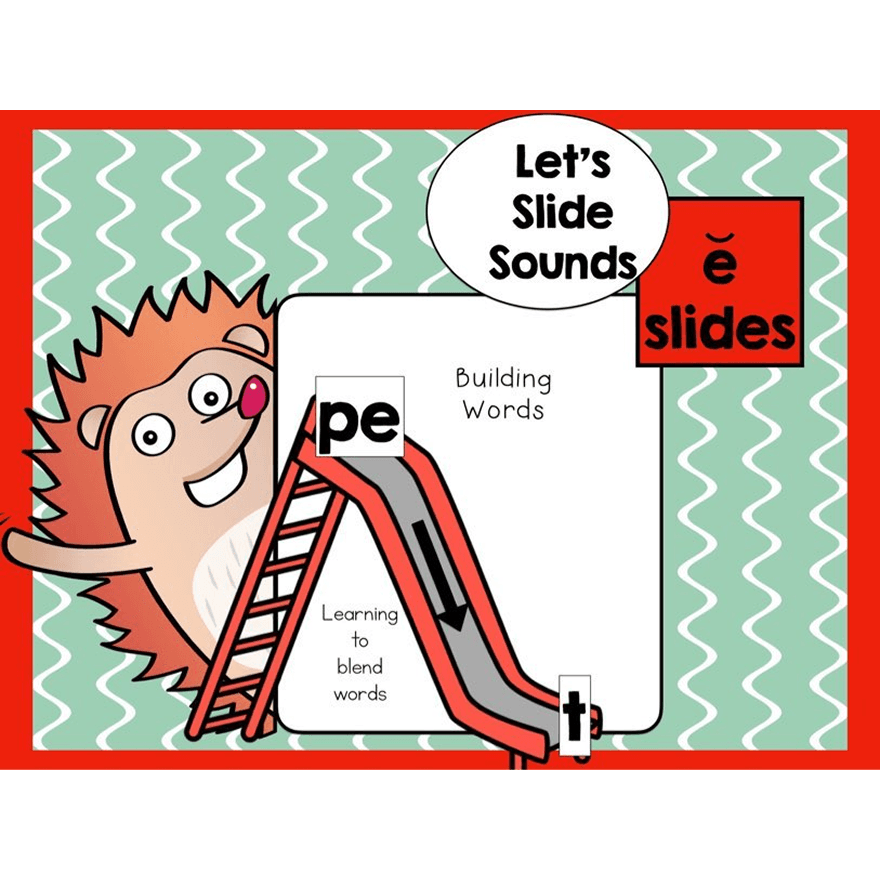
This activity helps children understand how phonemes blend to form words. Place a small toy or cube at the top of a slide. Say a word sound by sound, such as “c-a-t.” As the child slides the toy down, they blend the sounds together to form the word “cat.” This movement-based activity reinforces sound blending and makes phonemic awareness fun and engaging.
3. Mirror Sounds
You’ll need: A mirror.
Age range: 3-6 years old.
Best for: Phoneme articulation, visual and auditory connection, sound differentiation.
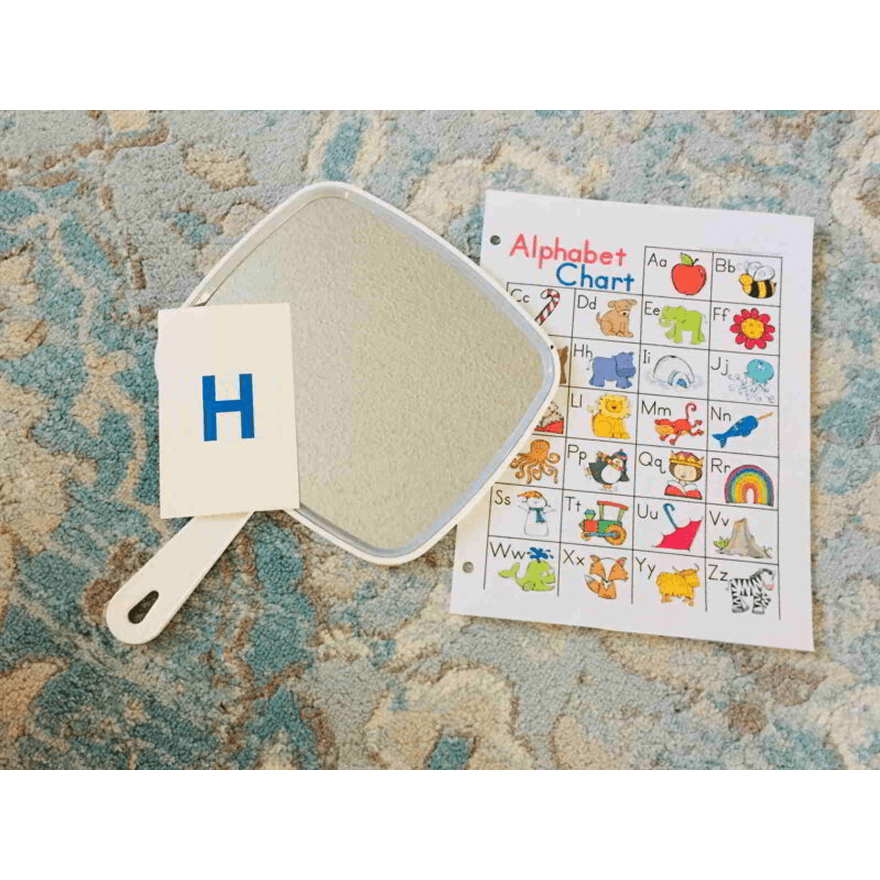
This activity helps children become aware of how their lips, tongue, and mouth move to produce different sounds. Ask the child to make a sound while looking in the mirror. Encourage them to observe how their mouth changes for different phonemes. This helps with articulation and sound differentiation, strengthening their ability to recognize phonemes in spoken language.
Building Phonemic Awareness Skills
4. Onset and Rime Blending
You’ll need: Picture cards, word lists, or a whiteboard.
Age range: 4-6 years old.
Best for: Phoneme blending, early reading skills, and word recognition.
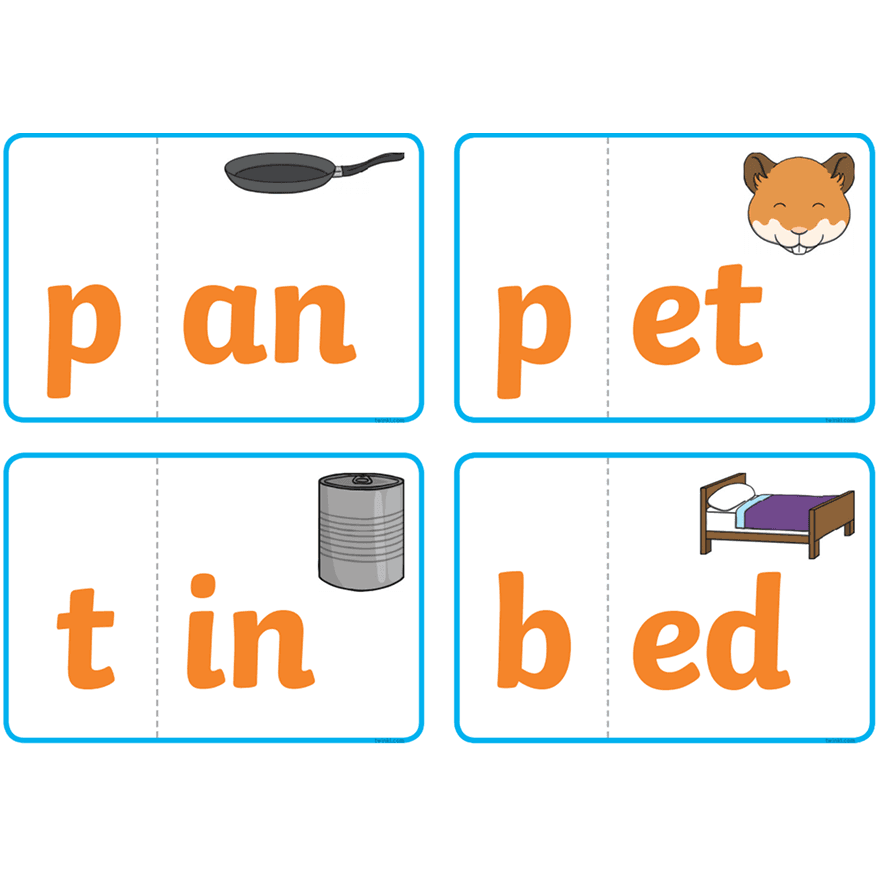
Onset and rime blending helps children hear and connect word parts. The onset is the beginning sound of a word, while the rime is the rest of the word. For example, in “c-at,” “c” is the onset, and “-at” is the rime. To practice, say an onset and rime separately (e.g., “m” and “oon”). Encourage the child to blend the sounds together to say “moon.” Use pictures to reinforce the meaning. This game helps children understand word structures and prepares them for decoding unfamiliar words.
5. Sound Segmentation
You’ll need: Small objects, counters, or a set of tokens.
Age range: 5-7 years old.
Best for: Phoneme isolation, auditory processing, and spelling skills.
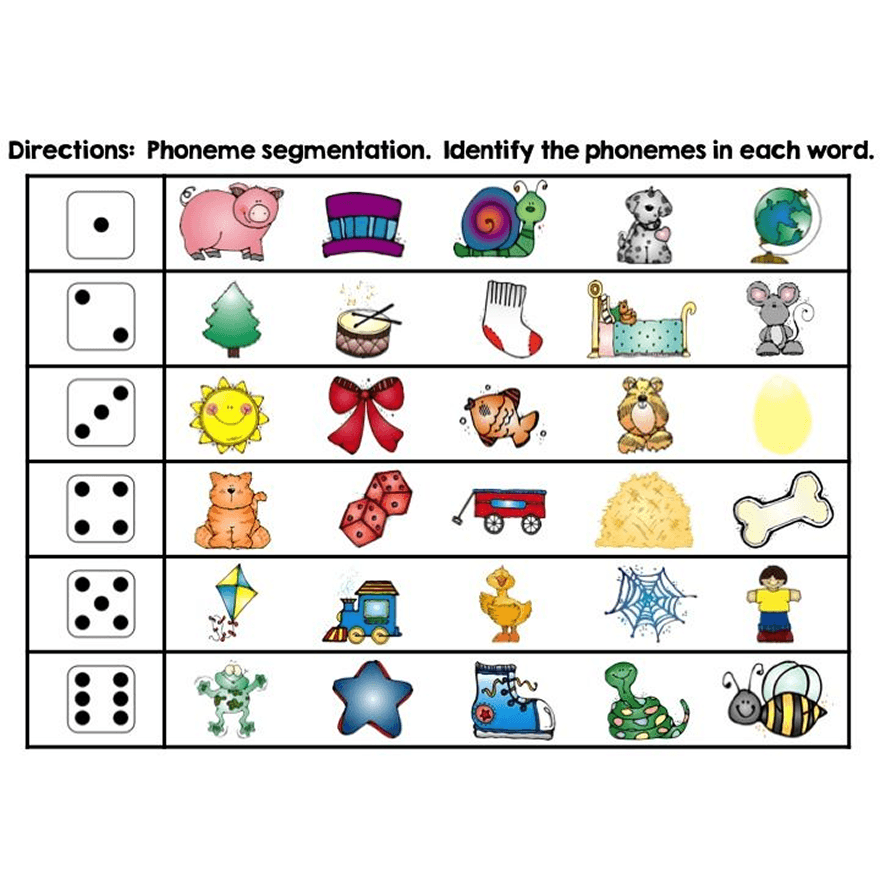
Sound segmentation teaches children to break words into individual phonemes. Say a simple word like “dog.” Ask the child to break it down into separate sounds: /d/ – /o/ – /g/. Give them three tokens and ask them to push a token forward for each sound they hear. This tactile approach reinforces the concept of phoneme segmentation. You can also use clapping or tapping for each sound to add a multisensory element.
6. Sound Substitution
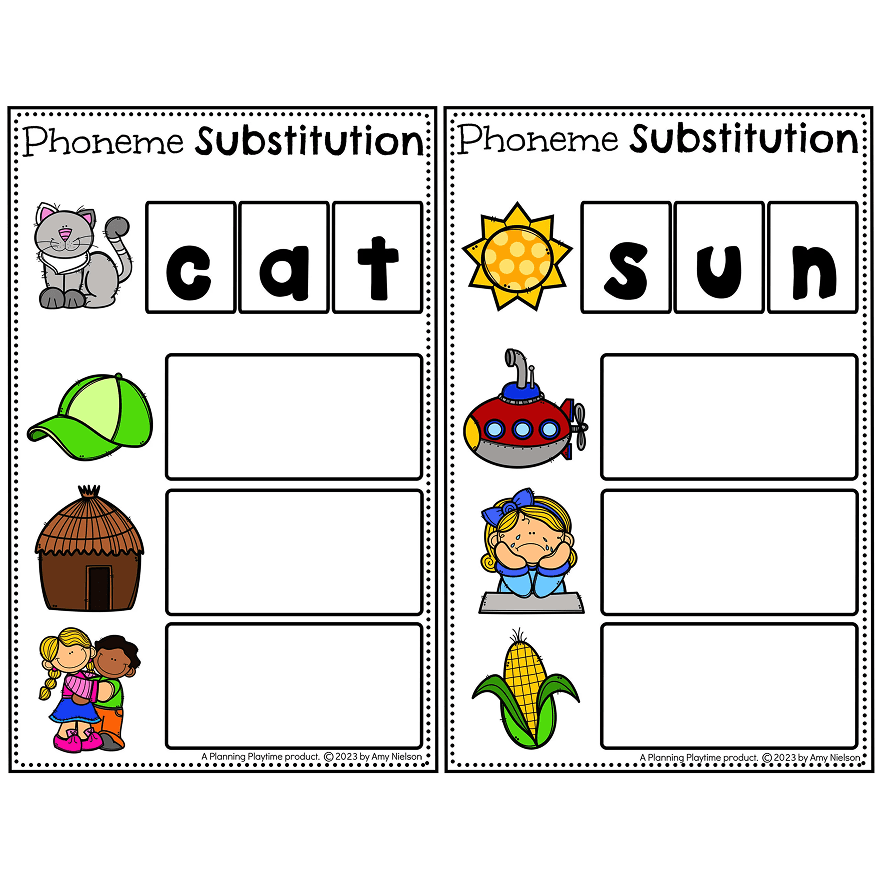
You’ll need: Flashcards with letters or word lists.
Age range: 5-8 years old.
Best for: Phoneme manipulation, word recognition, and early spelling development.
Sound substitution is a fun way to help children manipulate phonemes to create new words. Start with a simple word like “cat.” Ask the child to change the beginning sound (/c/) to /b/, forming “bat.” Continue by substituting the middle or ending sound to make new words. This activity builds phonemic flexibility and strengthens reading skills.
Advanced Phoneme Manipulation Activities
7. Phoneme Deletion
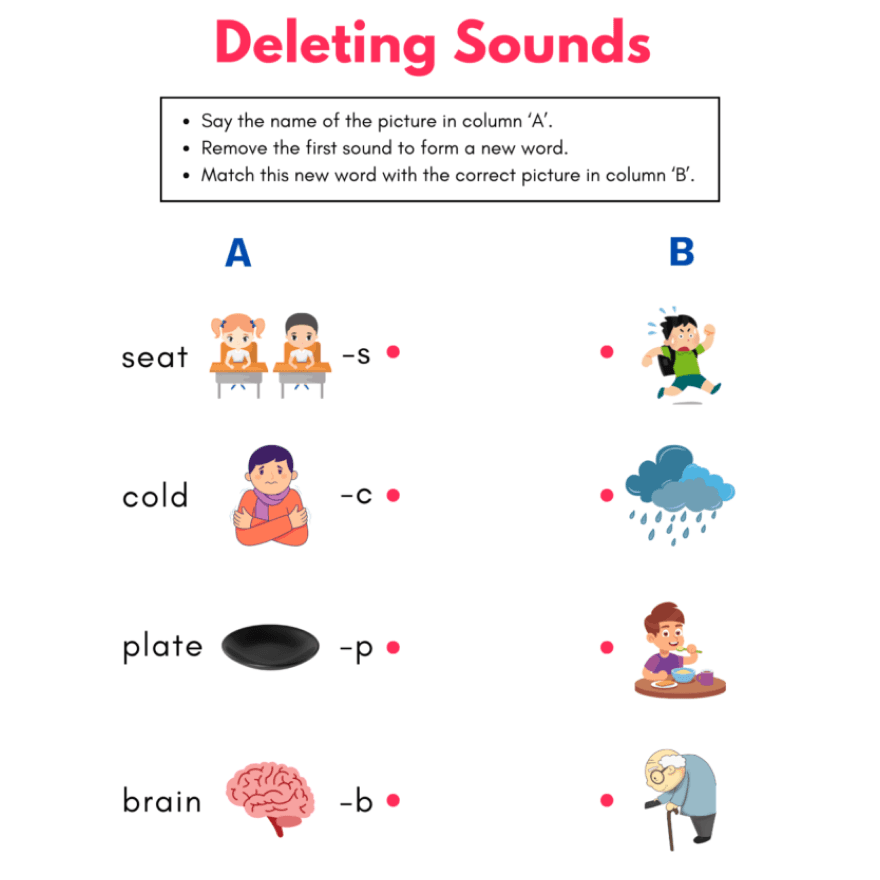
You’ll need: Flashcards with words or a list of simple words.
Age range: 5-8 years old.
Best for: Phoneme awareness, word structure understanding, early spelling skills.
Phoneme deletion helps children understand how removing a sound from a word can create a new word. Say a word like “smile” and ask the child to remove the first sound (/s/) to make “mile.” Repeat this with different words, removing beginning, middle, or ending sounds. This activity improves phonemic manipulation and prepares children for more advanced reading and spelling tasks.
8. Phoneme Manipulation
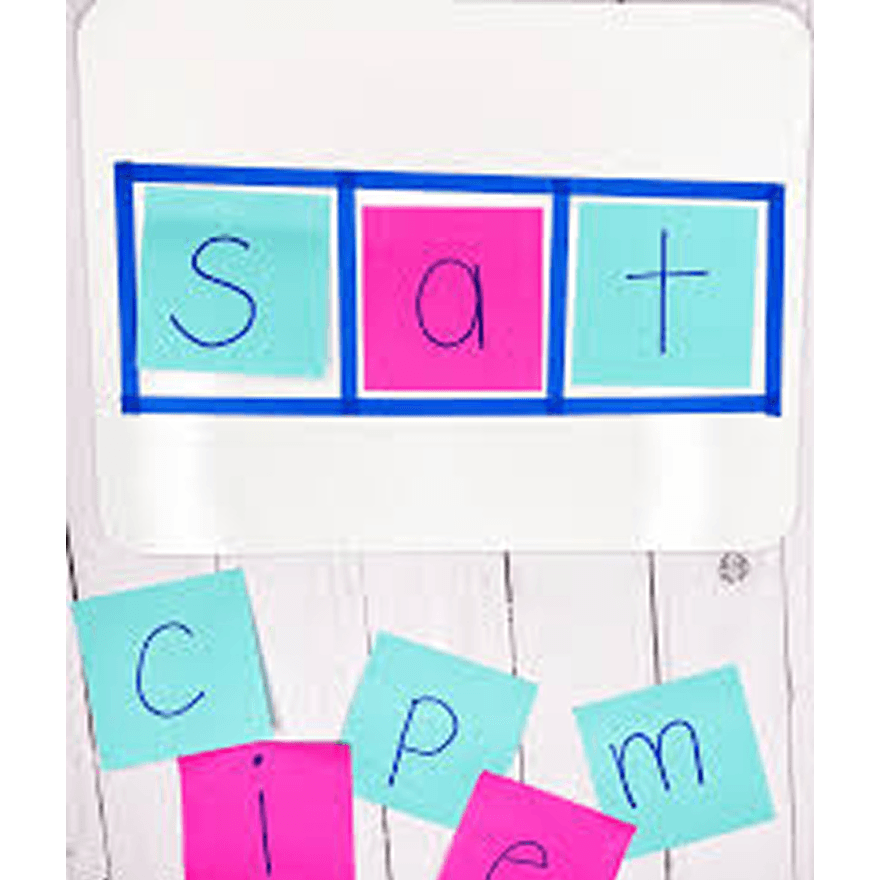
You’ll need: Letter tiles or paper with different sounds written on them.
Age range: 6-9 years old.
Best for: Phoneme flexibility, sound recognition, early literacy development.
This activity involves changing one phoneme in a word to form a new word. Start with a word like “hat.” Ask the child to change the first sound (/h/) to /p/ to make “pat.” Continue by changing middle or ending sounds. This helps children strengthen their ability to hear and manipulate sounds within words, a key skill for reading fluency.
9. Blending and Segmenting Words
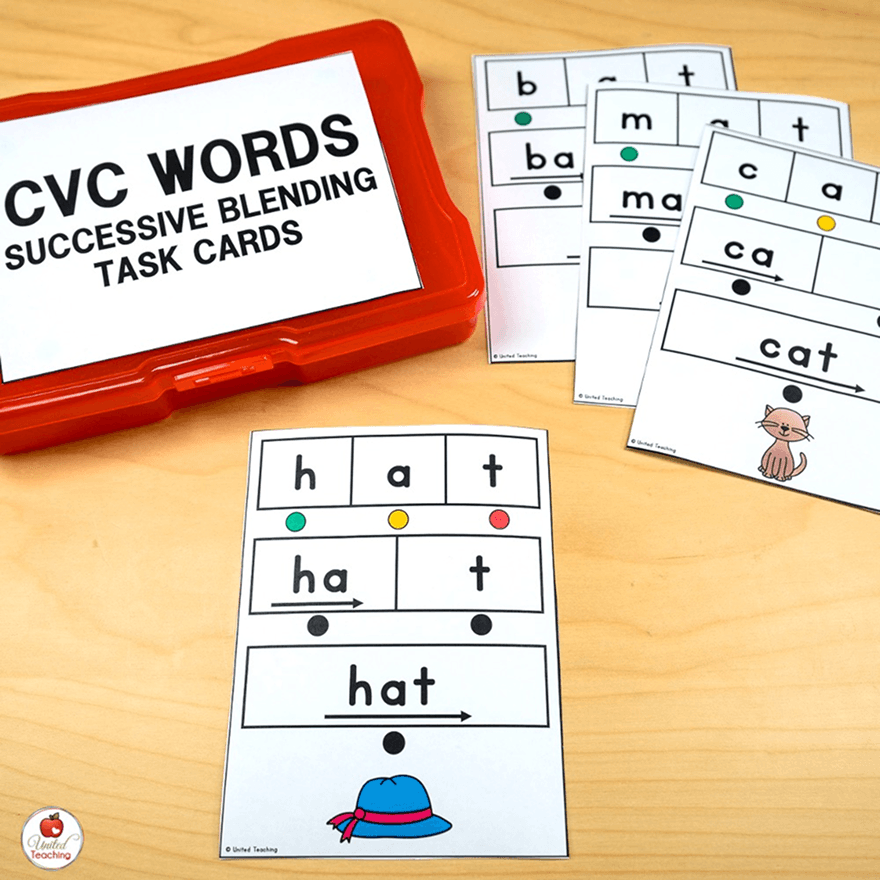
You’ll need: Small objects like beads or counters.
Age range: 4-8 years old.
Best for: Phoneme segmentation, sound blending, early reading skills.
Blending and segmenting words is crucial for reading development. Say a word like “dog” and ask the child to break it into its sounds: /d/ – /o/ – /g/. Give them three counters and ask them to push a counter forward for each sound they hear. To practice blending, give the child the individual phonemes and have them put the sounds together to form a word. This strengthens phonemic awareness and prepares children for reading.
Printable Phonemic Awareness Activities
Free Phonemic Awareness Worksheets
Accessing free phonemic awareness worksheets is an excellent way for parents and teachers to provide structured practice for small learners. These worksheets cover a range of activities, including phoneme matching, blending, segmentation, and deletion. They help reinforce key phonemic skills in an engaging and interactive way.
Here are some sources where you can find high-quality, free phonemic awareness worksheets:
- Education.com – A collection of phonemic awareness worksheets categorized by grade level and difficulty.
- Teachers Pay Teachers – Many free phonemic awareness worksheets from experienced educators.
- Reading Rockets – Research-based worksheets focusing on phonemic awareness skills.
- K5 Learning – Free downloadable phonemic awareness worksheets for kindergarten and early learners.
- We Are Teachers – Practical worksheets and hands-on activities designed for classroom and home use.
Using these free resources can help ensure consistent phonemic awareness practice for children, supporting their reading development in an enjoyable and structured manner.
Magic Pags: Engaging Phonemic Awareness Through Books
Phonemic awareness can be reinforced through meaningful listening experiences. Magic Pags offers a unique approach by integrating expertly selected books with the voices of Emmy award-winning voice artists. Each book is chosen to be age-appropriate, educational, and engaging while building foundational literacy skills.
Through Magic Pags, children can engage in phonemic awareness activities while enjoying storytelling. Listening to carefully books supports vocabulary development, cognitive skills, and phonological awareness. These stories create shared moments of joy, trust, and learning between children and caregivers.
Join the Magic Pags Test for Free and introduce your child to a world of books that improve their reading foundation in a fun and interactive way.

Final Thoughts
Phonemic awareness is an essential skill for reading proficiency. Engaging, research backed teaching strategies make learning more effective. Parents and teachers can incorporate fun and interactive activities to ensure children develop strong literacy skills. Consistent practice leads to greater reading fluency and confidence. By implementing structured and multisensory approaches, educators can create a learning environment where every child succeeds.
