

Phonological Awareness vs. Phonemic Awareness: Understanding the Key Differences

Have you ever wondered how children learn to read? It all begins with understanding sounds in words. Two important terms that often come up in early childhood education are phonological awareness vs phonemic awareness. These may sound similar, but they play different roles in helping young children become confident readers. This article will provide a comprehensive overview and guide for parents and educators in early literacy.
Table of Contents
- What is Phonological Awareness?
- What is Phonemic Awareness?
- Key Differences Between Phonological and Phonemic Awareness
- Why Phonological and Phonemic Awareness Matter for Parents
- The Role of Phonological and Phonemic Awareness in Preschool Education
- Phonological Awareness vs Phonemic Awareness for Kindergarten Teachers
- Final Thoughts
1. What is Phonological Awareness?
Phonological awareness refers to a child’s ability to recognize and work with sounds in spoken language. This includes understanding rhymes, identifying syllables, and hearing individual sounds within sentences. For example, a child with phonological awareness can recognize that “cat” and “hat” rhyme. Or, they can clap out the syllables in “banana.”
Phonological awareness is a vital skill for learning to read and write. National Early Literacy Panel research shows that children with strong phonological awareness are better equipped to decode words and understand written text.
2. What is Phonemic Awareness?
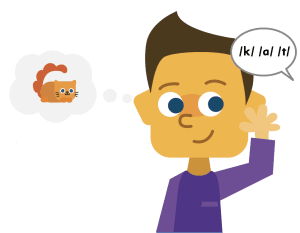
Phonemic awareness is a specific part of phonological awareness. It is the ability to identify, isolate, and manipulate sounds, or phonemes, in words. For example, a child demonstrating phonemic awareness can identify that the word “dog” consists of three sounds: /d/, /o/, and /g/. They can also change the first sound in “cat” to /b/ to form the word “bat.”
Phonemic awareness is essential for learning to decode words, as it helps children understand how letters and sounds connect in written language. Important studies, including those by the National Reading Panel, emphasize the significance of phonemic awareness as a predictor of future reading success.
3. Key Differences Between Phonological and Phonemic Awareness
While phonological awareness covers a wide range of sound-related skills, phonemic awareness focuses only on the smallest units of sound phonemes. Think of phonological awareness as an umbrella term that includes various abilities, such as recognizing rhymes, clapping out syllables, and identifying individual sounds. Phonemic awareness is a more specific skill under this umbrella that deals only with phonemes.
A helpful analogy is to think of math: phonological awareness is like learning addition, subtraction, multiplication, and division, while phonemic awareness is just focusing on addition.
4. Why Phonological and Phonemic Awareness Matter for Parents
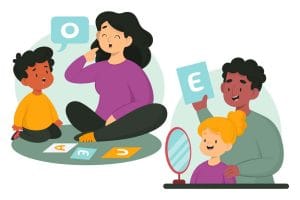
Parents play a significant role in helping children develop early literacy skills. Reading books aloud and engaging in sound-related games can make a big difference in a child’s readiness for school. Simple activities like singing rhyming songs or playing “I Spy” with sounds (e.g., “I spy something that starts with /s/”) can be both fun and educational.
By adding these activities to daily routines, parents can help their child’s learning. This approach lays the foundation for reading success. According to the National Early Literacy Panel, early interventions can shape a child’s reading path.
5. The Role of Phonological and Phonemic Awareness in PreK Education
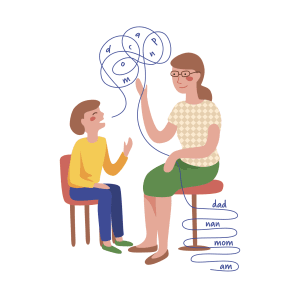
Preschool teachers have a unique opportunity to feed these foundational skills through playful, interactive activities. For example, teachers can guide children to clap out syllables in words, match rhyming words, or break words into individual sounds. These hands-on activities make learning engaging and help children develop a strong understanding of language.
Magic Pags combines interactive books with excellent resources for preschool classrooms, and also we offer books designed to enhance phonological and phonemic awareness through engaging, read-aloud sessions. You can start with a 3-month free trial of Magic Pags, and you can get a 1-year free trial as a gift for your feedback. Incorporating such tools can make learning more dynamic and enjoyable for young learners.
6. Phonological and Phonemic Awareness for Kindergarten Teachers
Kindergarten teachers play a crucial role in bridging early childhood education and formal reading instruction. Developing phonological and phonemic awareness in kindergarten helps children learn to blend sounds to read words, break words into sounds for spelling, and build a foundation for reading comprehension.
Teachers can use phonemic awareness activities like sound matching or phoneme substitution games to make learning interactive and impactful. By focusing on these skills, kindergarten educators can equip their students with the tools they need to become successful readers. Studies suggest that targeted phonemic awareness instruction in kindergarten significantly improves reading fluency and comprehension.
Final Thoughts
Phonological and phonemic awareness are essential components of early literacy. Understanding the difference between these skills and their importance can help parents, preschool teachers, and kindergarten educators work together to support children’s reading development. Remember, every small activity from rhyming games to phoneme practice brings kids closer to reading success.
Magic Pags brings together books selected by experts and featuring the voices of Emmy award-winning voice artists.
We carefully select each book to ensure it is age-appropriate, safe, and educational. Through these books, we offer activities designed to develop phonological and phonemic awareness. As our child listens, you are feeding not only their vocabulary and cognitive development, but also the foundation of love, trust, and shared joy. We work with you to create happier, more educational moments for our children.
Join the Magic Pags Test for Free and share the gift of books your child will love forever.
